Wireless communication relies on invisible electromagnetic waves that carry information through the air by altering their size or speed. By precisely manipulating these wave properties, using techniques like Amplitude Modulation (AM), Frequency Modulation (FM), and digital Frequency Shift Keying (FSK), devices can seamlessly transmit everything from analog radio broadcasts to high-speed Wi-Fi data.
How Wireless Data Moves
Select a concept to see the live wave transmission.
Amplitude: The fundamental size or strength of a wave. Notice how the height changes, but the speed stays exactly the same.
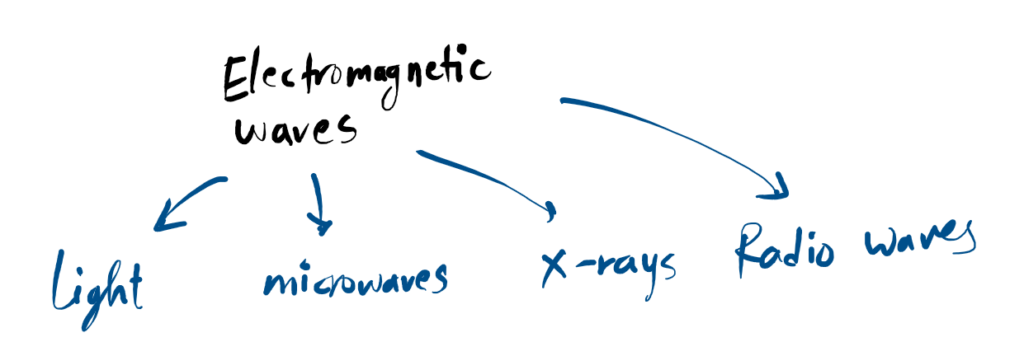
Electromagnetic waves include light waves, microwaves, x rays, radio waves etc.
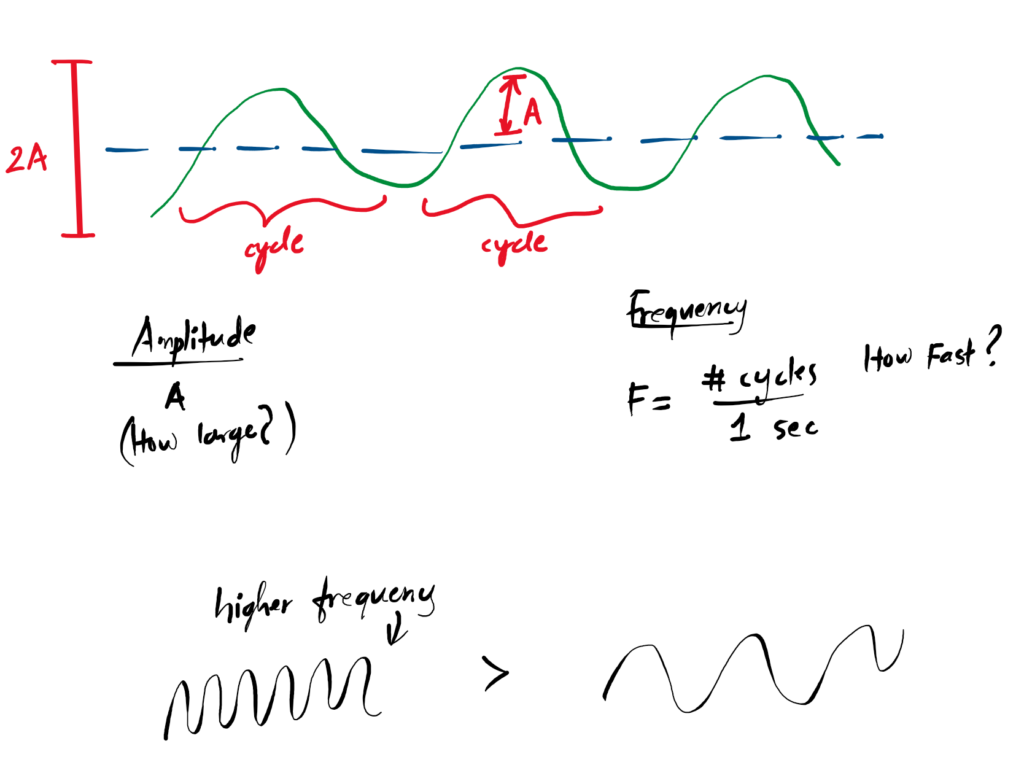
To use waves to transmit information, we need to quantify what makes two waves different from another waves. Two main factors for waves are amplitude (A) and frequency (number of cyles per second).
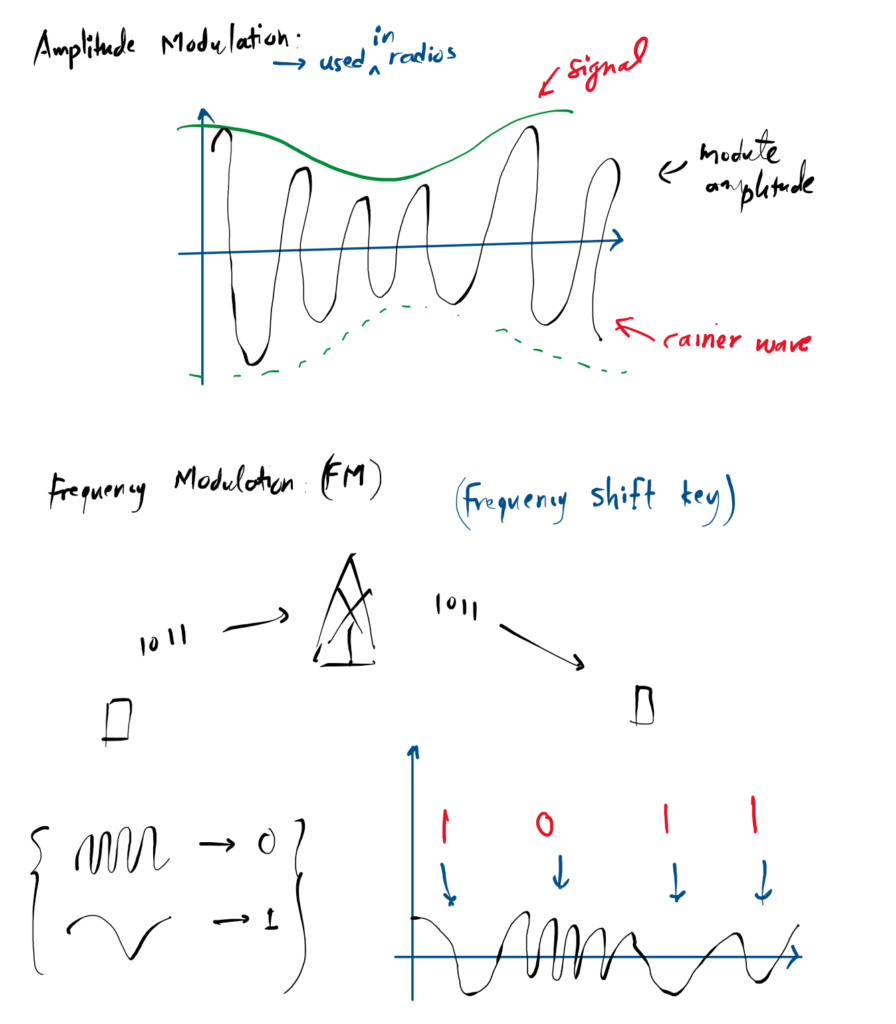
Now, we can use techniques such as frequency modulation or amplitude modulation to transfer a signal data.
Refer to the below glossary for more.
Wireless Glossary
Understanding the invisible world of wireless technology starts with its language. Explore the core concepts that define how our devices communicate over the air.
Electromagnetic (EM) Waves
The foundation of all wireless communication. These invisible waves are formed by oscillating electric and magnetic fields. They propagate outward from an antenna, much like ripples on a lake, carrying data across distances.
Amplitude
Amplitude is a measure of the wave’s “size” or peak strength. Technically, it is the distance from the wave’s central resting point up to its highest peak. If you visualize a wave, amplitude represents its vertical height.
Frequency
Frequency defines how fast wave cycles repeat in a single second. High-frequency waves have peaks that are bunched tightly together, while low-frequency waves are spread further apart.
Amplitude Modulation (AM)
Commonly used in broadcast radio, AM encodes data by varying the height (amplitude) of a carrier wave. The wave's size perfectly traces the shape of the sound wave being transmitted.
Frequency Modulation (FM)
In FM communication, the wave's height stays constant, but its speed (frequency) is altered to match the data signal. Waves bunch together horizontally for high signals and spread apart for low signals.
Digital Transmission (FSK)
Wi-Fi and cell phones use this method. Devices agree that one frequency represents binary "0" and a distinct second frequency represents binary "1," snapping between them to send binary code.
References
-
How Information Travels Wirelessly. Youtube.com, 2026.
https://www.youtube.com/watch?v=Ax7dYaRiY6o